Baby Eczema: What Actually Helps (Without Steroids)
Share
Watching your baby scratch at red, cracked patches is hard, especially when nothing you try seems to work fast enough. Here's the plain truth: baby eczema is one of the most common skin conditions in the first year of life, and it's almost always about an immature skin barrier that lets moisture out and irritants in, not something you did wrong. It's also not a sign your baby is unusually sensitive or that you've missed something obvious.
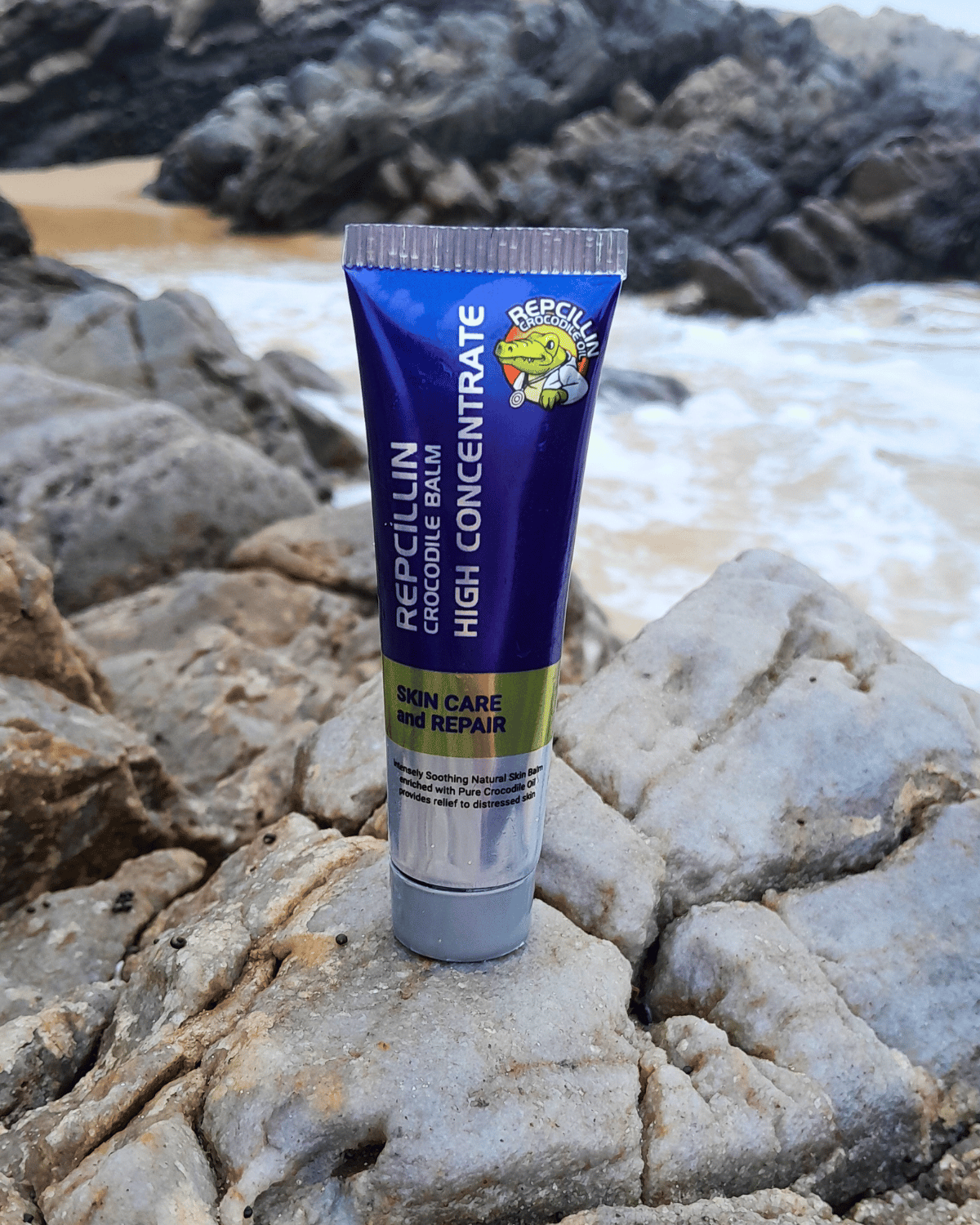
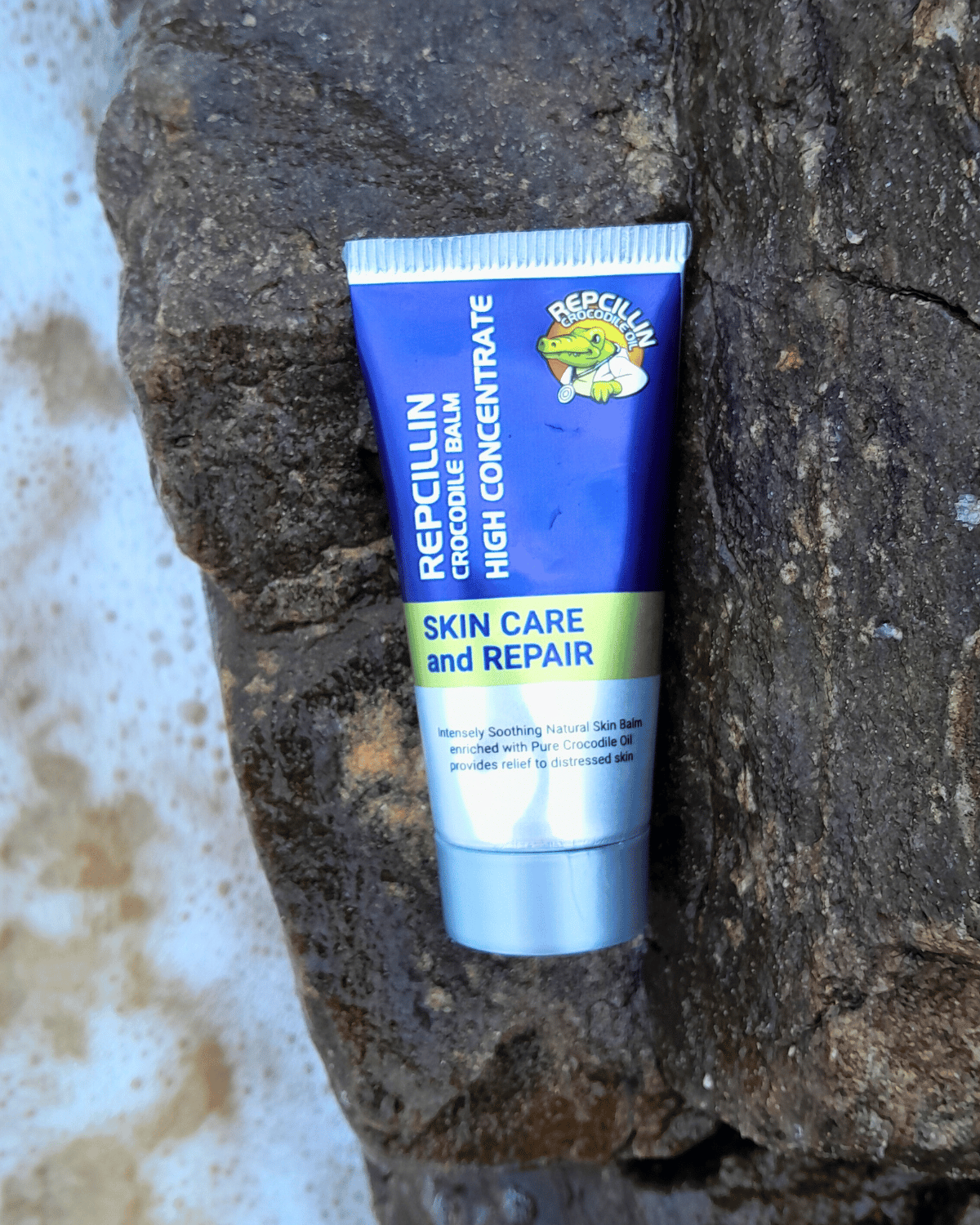
We hear from exhausted parents every week, and real relief usually starts with the basics, done consistently. Repcillin's High Concentrate balm is built from just five natural ingredients, no fragrance, no steroids, which is part of why it's gentle enough for reactive newborn and toddler skin.
Common triggers to watch
Heat and sweat, drool from teething, rough fabrics like wool, and long stretches in a wet diaper can all set off a flare on already sensitive skin. Certain soaps and bubble baths strip the skin's natural oils too, even ones marketed as gentle. You don't need to eliminate everything at once, just notice patterns. If a flare shows up after bath time, teething, or a scratchy jumper, that's useful information, not a coincidence.
What actually helps
Keep baths short and lukewarm instead of hot, since hot water strips the natural oils baby's skin needs. Moisturize within a few minutes of bathing, while skin is still damp, to lock hydration in rather than chase dryness after the fact. Choose fragrance-free products, babies react to added scent and essential oils far more easily than adults do. A thin layer applied several times a day works better than one thick layer once, and consistency over a few weeks matters more than any single application.
What to skip
Skip essential oils and added fragrance under 12 months, and don't wait for a bad flare before you start moisturizing, prevention works better than rescue. If patches crack, weep, or don't ease up after a couple of weeks, loop in your pediatrician to rule out infection or a food-related trigger.
Left alone, dry and cracked skin lets in more irritants and turns into a scratch-itch cycle that gets harder to break the longer it runs. With a steady routine, most babies' skin does settle, calmer, no longer waking them at night from the itch. If you want a simple, gentle place to start, our eczema relief guide for babies and children walks through exactly how families use Repcillin safely.
Frequently asked questions
Is Repcillin safe for babies?
Yes. The High Concentrate is our best option: just crocodile oil, sunflower seed oil, grapeseed oil, beeswax and vitamin E, with no fragrance or essential oils added, which makes it a gentle fit for delicate baby skin.
Which product should I use for my child's eczema?
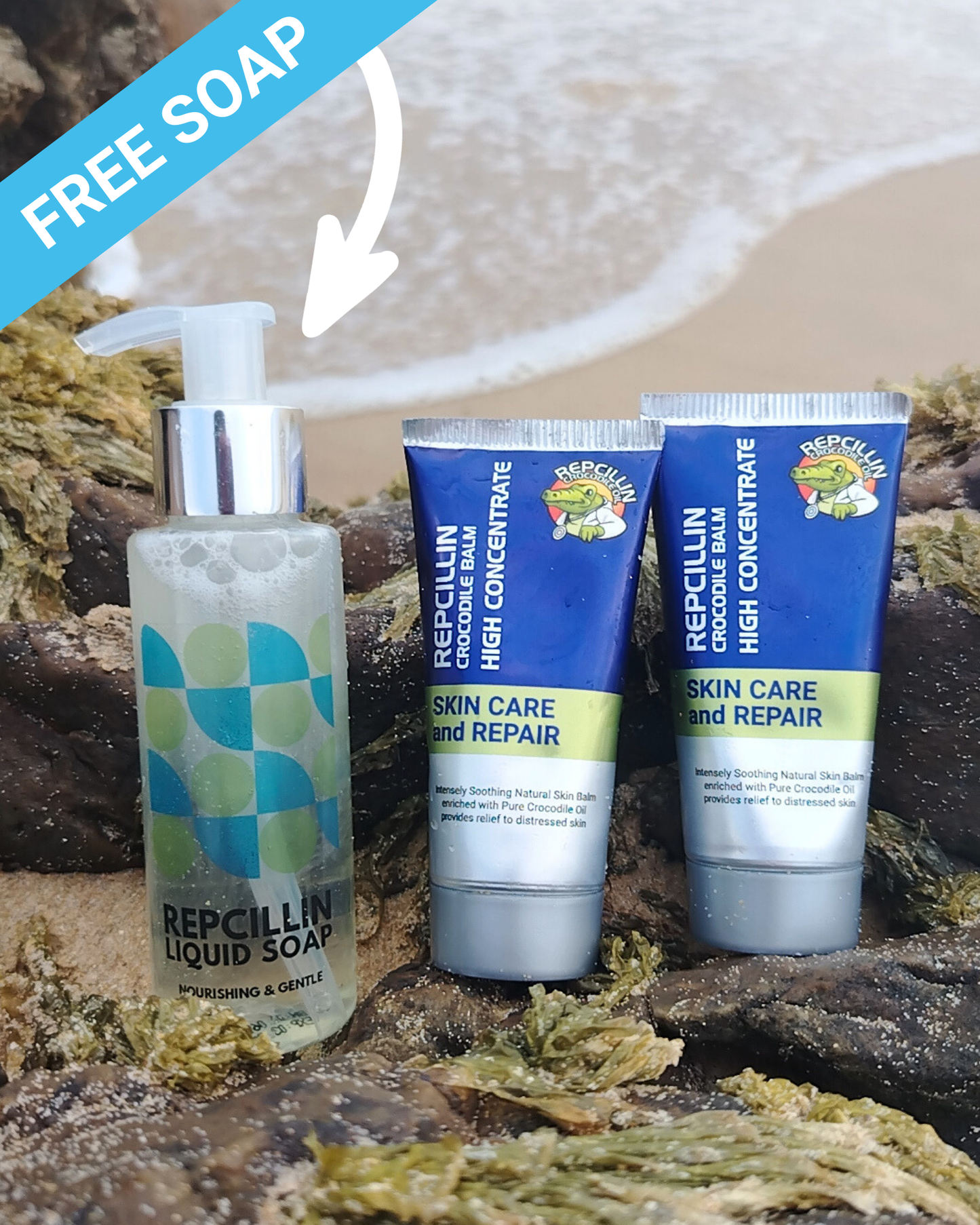
The High Concentrate is usually the right place to start. It's gentle enough for sensitive spots like the face and eyelids, but strong enough for active flare-ups. A thin layer three to five times a day is the general guide, and you genuinely can't overdo it. Pairing it with the Liquid Soap at bath time helps too, since it won't strip the skin the way regular soap can.
My child's skin got worse after starting a new product. Is that normal?
It can happen, especially if a steroid cream was used before, even briefly. When skin stops being suppressed it can flare temporarily while it relearns to heal on its own. It's unsettling to watch, but it usually passes with consistent use, and it's worth reaching out for a second set of eyes on the routine if you're worried.