
5 Eczema Myths Keeping South Africans Hooked on Cortisone Cream
If you have eczema, you have probably been told that cortisone cream is the only thing standing between you and a full-blown flare-up. It is not true, and believing it is one of the reasons so many South Africans get stuck in a cycle of flare, cortisone, calm, flare again. Eczema is a barrier and inflammation problem, not just dryness, and the skin needs daily support, not just a steroid for emergencies. Below are five of the most common eczema myths we hear from customers, and what is actually true instead.
- Myth 1: Cortisone cream is the only thing that works on a flare-up.
- Myth 2: If a product does not sting, it is not doing anything.
- Myth 3: Eczema is just dry skin, so any moisturiser will do.
- Myth 4: Once you start cortisone, you cannot stop without your skin getting worse.
- Myth 5: Natural products are too gentle for a "real" bad flare.
Myth 1: Cortisone cream is the only thing that works on a flare-up
Cortisone (topical steroid) cream calms inflammation fast, which is exactly why it gets reached for first. But dermatology guidance is consistent on this point: daily moisturising with a rich, barrier-repairing emollient is the actual mainstay of eczema management, with cortisone meant for short, occasional use on top of that routine, not as the routine itself.
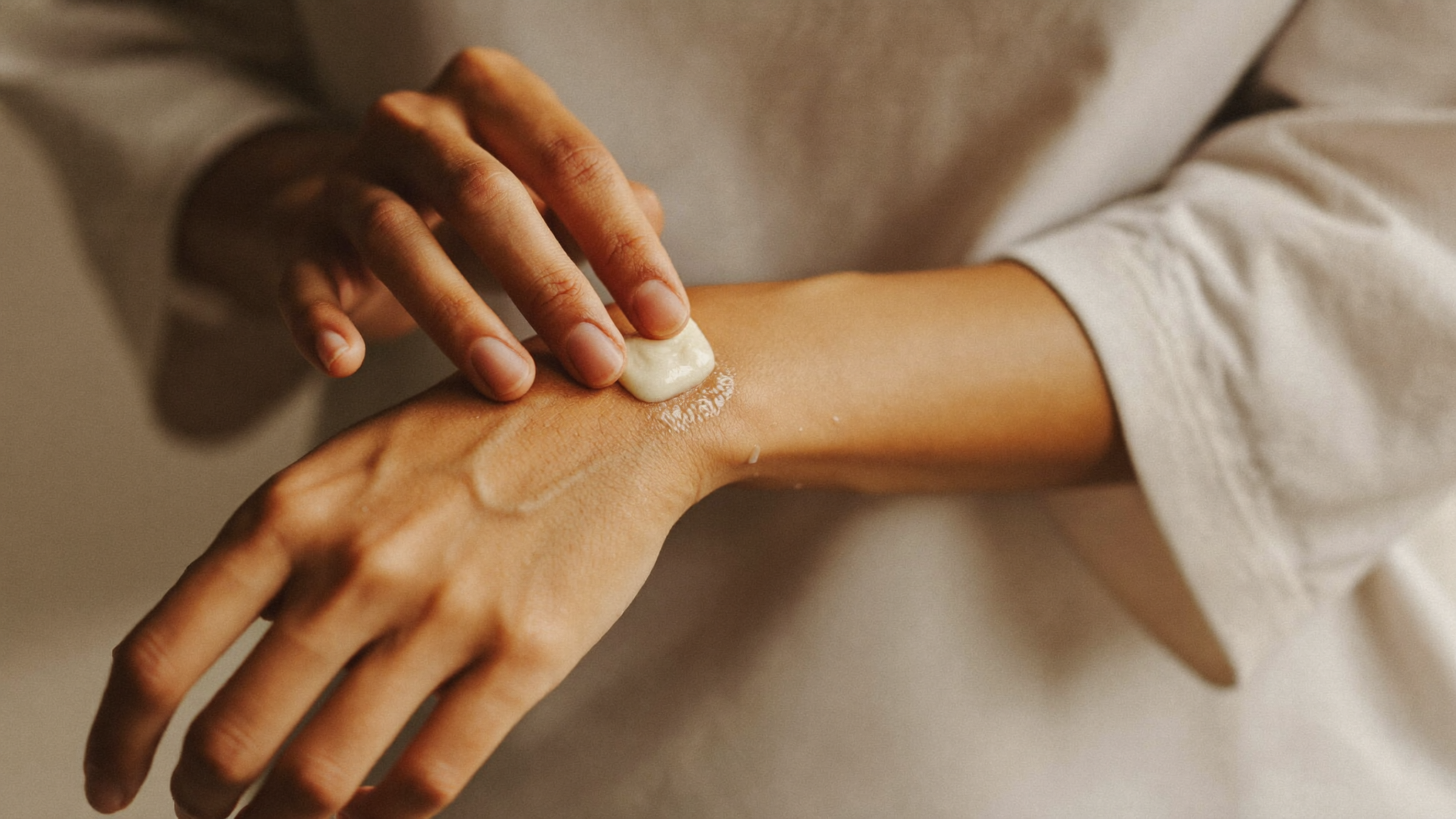
A thick, natural balm used consistently, morning and night and after every wash, does the job cortisone cannot: it keeps the skin barrier intact between flares, so there are fewer flares to treat in the first place. That is the gap our High Concentrate Balm is built for. It is formulated for sore, dry, itchy, uncomfortable skin, with no cortisone and no harsh chemicals, so it is safe to use as often as your skin needs it.

A rich, cortisone-free crocodile oil balm for eczema, dry itchy patches and flare-ups.
Myth 2: If a product does not sting, it is not doing anything
This one is understandable. Plenty of skincare is built around the idea that tingling means it is "working." On eczema-prone skin, that logic backfires. A flare-up means the skin barrier is already broken and more permeable than normal, so fragrance, alcohol and strong actives sting first and irritate before they help, if they help at all.
Gentle and effective are not opposites on damaged skin, they are requirements. A cortisone-free balm that does not sting is not weak, it is simply made for skin that cannot afford another irritant. That is the whole idea behind Repcillin: no cortisone, no harsh chemicals, no fragrance, and no sting, even on broken or weepy patches.
Myth 3: Eczema is just dry skin, so any moisturiser will do
Eczema is not simple dryness. It is a combination of a weakened skin barrier and ongoing inflammation, which is why ordinary lotions often disappoint: thin, watery, fragranced creams evaporate quickly and can sting on already-compromised skin. What helps is a thick, occlusive balm that locks in moisture and supports the barrier itself, ideally with ingredients that also have some calming, anti-inflammatory action, such as the essential fatty acids found in crocodile oil.
To be fair to the science, no natural oil is a cure for eczema and it should sit alongside, not replace, your doctor's advice for moderate to severe cases. What it can do, used daily, is reduce the dryness, tightness and flaking that make a flare worse, which is exactly what thousands of Repcillin customers report when they switch from a basic lotion to a proper barrier-repair balm.
| What you need | Cortisone cream | Cortisone-free balm (daily use) |
|---|---|---|
| Fast relief on a bad flare | Yes, quickly reduces inflammation | Yes, with consistent use over the flare |
| Safe for daily, long-term use | Not recommended, doctors advise short courses only | Yes, designed to be used every day |
| Risk of skin thinning or rebound | Possible with prolonged or strong use | No known steroid-related risk |
| Stings on broken or weepy skin | Sometimes | No, formulated without fragrance or harsh chemicals |
| Suitable for babies and little ones | Only under medical guidance | Yes, gentle enough for daily family use |
Myth 4: Once you start cortisone, you cannot stop without your skin getting worse
This fear is not irrational. Long-term or repeated use of topical steroids has been linked to a real, recognised reaction when people stop: Topical Steroid Withdrawal (TSW), where skin can become red, burning and itchy after the cream is discontinued. The National Eczema Association and other dermatology bodies recognise this as a side effect of overuse, not a sign that cortisone is the only thing keeping your skin together.
This is precisely why so many South African families look for a cortisone-free option to use every day, long before they are forced to stop a steroid cold. Building a daily routine around a natural balm reduces how often you need cortisone at all, which is the safest way to avoid the withdrawal question altogether. We go into more detail on this on our cortisone and TSW page.

A bigger size built for daily use, morning and night, without cortisone.

Myth 5: Natural products are too gentle for a "real" bad flare
We hear this from people who have, in their words, tried everything. The truth is that "natural" and "weak" are not the same thing. A high-concentration, fatty-acid-rich balm is still a serious barrier-repair product, it is just one without cortisone, fragrance or harsh chemicals working against the skin while it tries to heal.
"Years of dyshidrotic eczema left her hands swollen, raw, and wrapped in bandages just to get through the day. She had tried everything, doctors, medications, endless creams, and nothing helped. Repcillin was the last product she was willing to try. The burning stopped, the swelling eased, and within days her hands looked like a different person's."
Stories like this are why Repcillin has been rated 4.8 out of 5 across more than a thousand reviews. It is also why, if your skin has been through every cream going and you are tired of the cortisone cycle, a gentle product is worth taking seriously rather than dismissing as "not strong enough."
Frequently asked questions
Can eczema be treated without cortisone cream?
Yes, for most mild to moderate eczema, the daily basics, a rich emollient balm used consistently, fragrance-free products and avoiding known triggers, manage symptoms without relying on cortisone. Severe or persistent eczema should still be assessed by a doctor or dermatologist.
Why does eczema flare up worse at night?
Cortisol, the body's natural anti-inflammatory hormone, drops in the evening, the skin loses more moisture overnight, and skin temperature rises slightly during sleep, all of which make itching more noticeable and harder to ignore once you are lying still. Applying a rich balm right before bed helps offset the overnight moisture loss.
Is crocodile oil safe for eczema-prone skin?
Crocodile oil is naturally rich in oleic and linoleic fatty acids, which support the skin barrier, and has mild anti-inflammatory and antimicrobial properties. It is generally well tolerated on sensitive and eczema-prone skin, though as with any skincare ingredient, it is worth doing a small patch test first if you are trying it for the first time.
How long does it take to see results from a cortisone-free routine?
Many Repcillin customers notice less redness and itching within days of consistent use, with fuller improvement over two to four weeks as the skin barrier rebuilds. Eczema varies a lot from person to person, so results and timelines will differ.
Can babies use cortisone-free eczema balms?
Yes, gentle, fragrance-free, cortisone-free balms are generally suitable for little ones with dry, itchy or flare-prone skin, which is why we have a dedicated children's eczema page. If you are ever unsure, check with your paediatrician first, especially for very young babies or broken skin.
Give Your Skin a Cortisone-Free Break
Join thousands of South African families who have swapped the flare-cortisone-flare cycle for a gentle daily routine.
Shop High Concentrate Balm →Voted 5 stars. Cortisone-free. Trusted by thousands of South African families.